
Welcome to Marudai | Blessings from Mt. Akagi | History of Marudai
History of Marudai
From the founding to the second generation
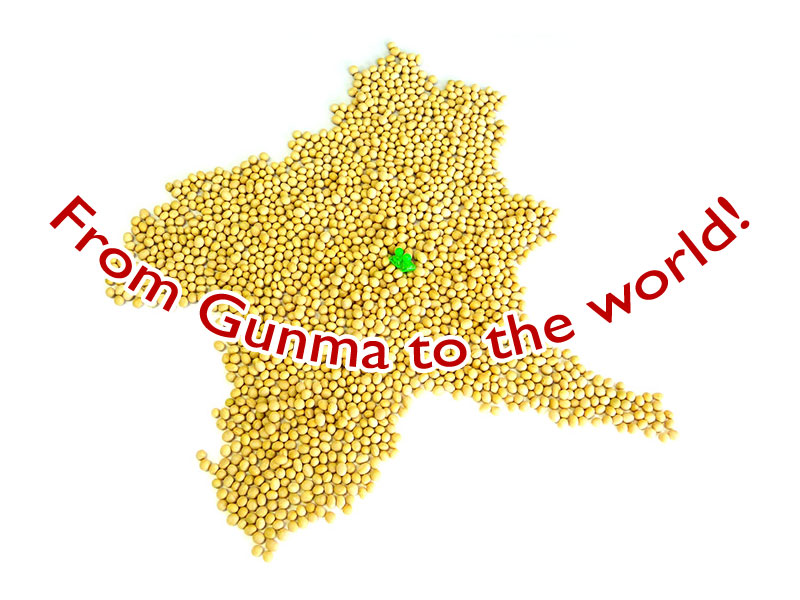
Founder Tadashi Yanagisawa was born in a steelworks in Ashikaga, Tochigi Prefecture. While serving in the Utsunomiya Regiment, he married Matsu, the daughter of a well-known local natto shop called “Ono Shoten.” He took this opportunity to learn how to make natto, and in 1919 he opened Yanagisawa Tadashi Shoten in Maebashi City, Gunma Prefecture. The Ono children spread throughout the family, running natto businesses in Sano and Oyama, Tochigi Prefecture, Azabu in Tokyo, and Kumagaya, Saitama Prefecture. Tadashi’s younger brother also opened businesses in Numata and Ota, Gunma Prefecture. It has recently been discovered that the family’s business consortium was known as the “Marudai Norenkai.”
This suggests that before the modernization of the natto industry, the production method was passed down in extremely secretive secrecy. During the reign of the second generation head of the company, the passionate researcher Kiyoshi frequently visited Mr. Kazuo Miura and Dr. Jun Hanzawa, working to improve natto production methods and the quality of the product. Fellow natto makers who learned of this visited Kiyoshi, and it appears that he provided in-depth advice to those with sales areas that did not overlap, such as neighboring prefectures and other areas of Gunma Prefecture.
Difficulties after the war
Things took a turn for the better after the war, when soybean control came into effect shortly after the war. At that time, it was not possible to buy soybeans and sell them commercially, so natto could not be produced, and it was the toughest time for natto manufacturers. This was in the 1940s, and during that time the family survived by making paper balloons and paper warping.
We still hear stories from people around us, probably from around the time they were able to produce natto, that “in times when there was a food shortage, Marudai Natto-san would pull a cart and bring us natto.” This anecdote proves that Marudai Natto has lived alongside the local people of Maebashi.
1950s
Until the 1950s, natto was produced by hand, with no machinery. Kiyoshi would manage the temperature in the fermentation room and change shelves, even late at night, to control the fermentation progress of the natto. The room’s walls were insulated with sawdust, and humidity and temperature were controlled using skylights, charcoal grills, and large kettles. Also, at the time, they used a packaging material called “kyogi,” made by shaving wood such as red pine into paper-thin pieces and drying it, which was very difficult to control. In the 1950s, the process became semi-automated, and steam piping was introduced. Then, with the advent of polystyrene foam in the 1960s, the production method changed considerably.
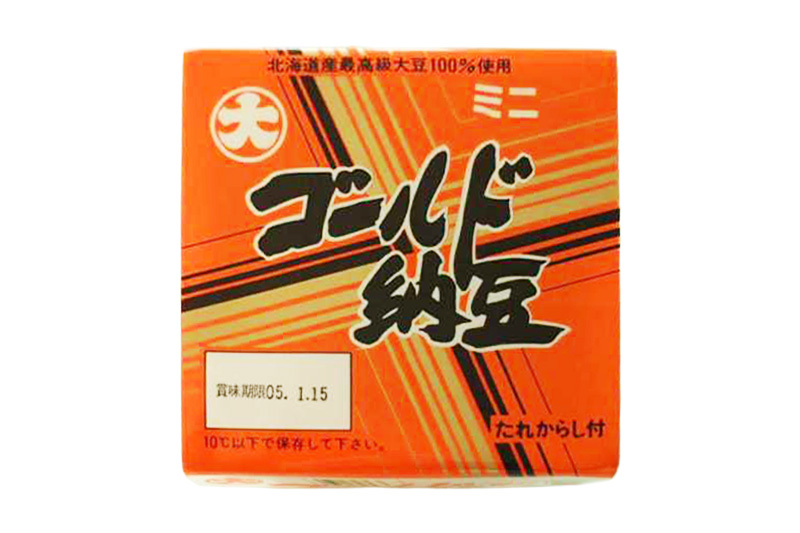
Among them, “Gold Natto,” which had a rare gold and black package on a red background at the time, became a long-selling product for Marudai, and the association “Marudai Natto = Gold Natto” remained in the memories of Gunma residents for a long time.
1960s (Fujimi to present)
Under the third-generation owner, Keiichi, the company moved from downtown Maebashi to its current location at the foot of Mount Akagi in 1967. At the time, the natto fermentation room was not yet automated, but a new room with automated management was installed when the factory was expanded. In 1973, the company name was changed to “Marudai Natto Ltd.”
The 1960s saw major changes within the industry. With the arrival of refrigerated storage, cheaper natto from major manufacturers in other prefectures began to be sold nationwide, creating difficult times for natto manufacturers in various regions and leading some to go out of business. One after another, Marudai’s family businesses went out of business, but only Marudai Natto survived. However, with the spread of bread in the latter half of the Showa era and a sharp decline in the provision of natto in school lunches, the company continued to search for ways to survive.
In the 1970s, the company built a tofu factory and began producing tofu, then established a trading company division and began wholesale business, and has gone through various other endeavors to become the Marudai Co., Ltd. that it is today. Kazuyo is now the fourth generation owner, and with support from organizations such as JETRO, they are focusing on exporting natto to spread its appeal to people all over the world. Furthermore, in light of the SDGs, they are also working to expand sales channels for environmentally friendly paper cup natto.